You can do it too in the AI era.
Before We Start
If you came here looking for a “get rich with AI” story — this isn’t it. I’m not chasing investors, and not quitting the job I love. What you’ll find instead is a story of exploration and learning — a six-month journey to answer a question many people are asking today: Can AI truly help individuals — even those without full technical knowledge — build a real, production-ready app that people would actually pay for?
I wanted to find out for myself. And I did — but not without the pains, late nights, and moments of doubt that came with it. This is a story of what I learned along the way — how AI can amplify creativity, what it can’t replace, and what it means for how we work in the years ahead.
My Story as a Dad
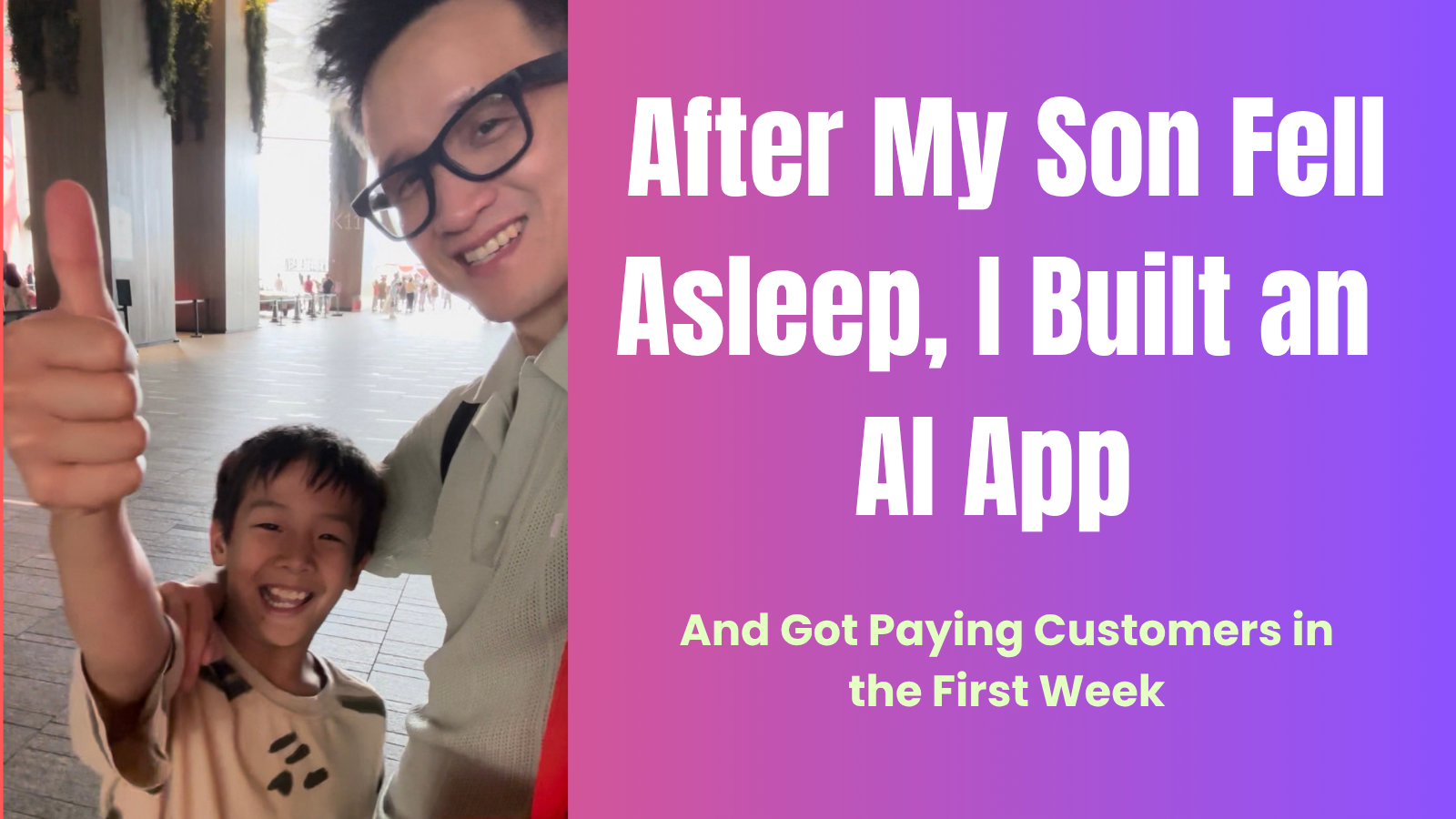
It’s around 9:30 p.m. The house is finally quiet. My son’s asleep, his backpack by the door, ready for another morning. The dishwasher hums softly in the kitchen, and the glow from my phone lights the room. I’m sitting on the edge of my bed, watching stand-up clips, half-laughing, half-tired.
It’s a rhythm I know by heart — early mornings, meetings and deadlines at the office, math class, fencing, dinner, and bedtime stories. Tonight’s feature was Dog Man — for probably the 900th time. By now, I should be asleep too.
But as I scrolled, a familiar thought surfaced: Is this it? Is this all I want — to be a happy professional, a good dad, and call it a day? Then another voice followed: What if I created something again?
Not for money or recognition, but because I miss building things — the feeling of solving problems, of making something real that might be useful to people. It wasn’t a grand epiphany, just a quiet itch — the kind that doesn’t go away. So that night, instead of turning off the lights, I opened my laptop.
The Spark — How It All Started
It started with a casual dinner conversation with a friend. She had just been promoted and wanted fresh professional headshots for her company profile and LinkedIn. She told me about the whole ordeal — booking the studio, scheduling the shoot, getting makeup done, posing under hot lights.
But the real pain wasn’t the time. It was the cost. A $400 session/package, and every extra photo she liked? Another $100. When she showed me the results, they looked… fine. But a little too perfect/overdone. Even she admitted, “It looks kind of AI-generated.”
Your professional headshot does matter
Now, I’m lucky. Some teams at my workplace hire professional studio photographers, and the one we work with is amazing. But that’s not the reality for most people. And yet, professional photos matter. They make a huge difference in confidence, first impressions, and even recruiter outreach. According to LinkedIn’s own data, profiles with a polished headshot get up to 21× more views.
The Controversy — and My Take on It
There’s a lot of debate about using AI for professional photos — or, really, using AI for anything. I get it. My view lines up with one of the most highly engaged comments I came across on this topic: Our professional selves are polished versions of us anyway. We wear the right clothes. We choose the right words in meetings. We follow certain unspoken rules. So if AI can help us achieve that same polish — faster, cheaper, and with less friction — that’s just practical.
My point is, if you can afford a human photographer, absolutely do it — that human connection and artistry are irreplaceable. But if you don’t have an extra $300–500 lying around, or you simply want to update your photos more often, AI can democratize access to something that was once a luxury. And that idea stuck with me.
The Realization — the existing products on the market are problematic
So I started exploring AI headshot services. And wow — there were so many of them. I tried a few myself. And three big problems jumped out immediately:
- The Price Tag: They still cost $30–$50 upfront.
- The Wait Time: You had to wait 2–24 hours to see any results.
- The Risk: You had to pay before seeing if the AI could even get your face right.
That’s a frustrating journey for someone who just wants a good headshot. That’s when it hit me: The biggest barrier wasn’t the technology. It was trust.
The Solution: Introducing the Free AI Headshot Generator
So I decided to build a service that removed that barrier — one that’s fast, fair, and risk-free. That’s why today, I'm launching the Free AI Headshot Generator.
I built this with one goal: transparency. I want you to see what this technology can do without opening your wallet.
- 100% Free: No credit card required. No "pay to unlock" tricks.
- No Login Barriers: You don't even need to create an account to start. Just upload and go.
- High Quality: It uses the exact same premium AI models as our paid tools. We didn't downgrade the tech for the free version.
Are there limits?
Yes, to keep this sustainable as a free tool, you get one professional headshot per session, and the resolution and quality are optimized for speed rather than maximum detail. It gives you a real taste of what our AI can do, while our premium packages offer the full HD, studio-quality experience.
But There’s a Second Layer to My Motivation — a Selfish One
AI is moving at lightning speed. Every week brings something new — smarter models, faster tools, more automation. And honestly, I didn’t want to just read about it. I wanted to feel it — to get my hands dirty and build something powered by this wave.
“Coding Used to Be a Wall. Now It’s a Door.”
I’m not a software engineer. But tools like Claude Code and Wispr Flow completely changed the game for me. What used to take a team of engineers, I now do after bedtime.
I literally talk to Wispr Flow, it captures my ideas, and Claude Code turns my words into real, usable code. No syntax panic. No endless StackOverflow tabs. Suddenly, front-end, backend, database — all felt within reach.
What's Next?
The tool is live. I invite you to try it. Whether you're a student, searching for a job, or just curious, you deserve a professional image without the $400 price tag.
Stay tuned for Part 2, where I'll dive into the technical MVP and how I built the entire backend in a week.